
9 Steps to a Successful Affiliate Marketing Business💯

Valued at $12 billion, the affiliate marketing industry offers a great potential to make money online. Apart from being flexible and low-risk, this online business model requires little to no costs to start.
When starting your own affiliate marketing business, understanding the basics will help you set fair expectations and avoid affiliate marketing mistakes.
This article will explain all you need to know about how to start affiliate marketing – from choosing a niche to tracking online success.
How to Start Affiliate Marketing
In the following sections, we’ll walk you through the steps to start affiliate marketing.
Step 1. Decide on a Niche
The first step in any successful affiliate marketing strategy is to select a segmented target market and audience, also known as a niche.
A niche market is typically characterized by a shared interest or demographics, which subsequently influence product quality and price point.
For instance, within the skincare industry, particular niches could include skincare for kids, anti-aging, or acne-prone skin.
Targeting a small market segment is more effective than trying to follow trends or appeal to an entire industry. Thus, it is easier to establish brand recognition, grow expertise, and build authority.
Here are several considerations to help you select an affiliate marketing niche.
- Start with your passion or interest. Picking a subject that interests you will make content creation enjoyable. Alternatively, go for a topic you have mastered – having product knowledge will help establish yourself as a reliable source.
- Analyze your competitors. Determine the level of difficulty in entering that niche. If it’s a high-competition niche, find and highlight your unique selling point to stand out from competitors.
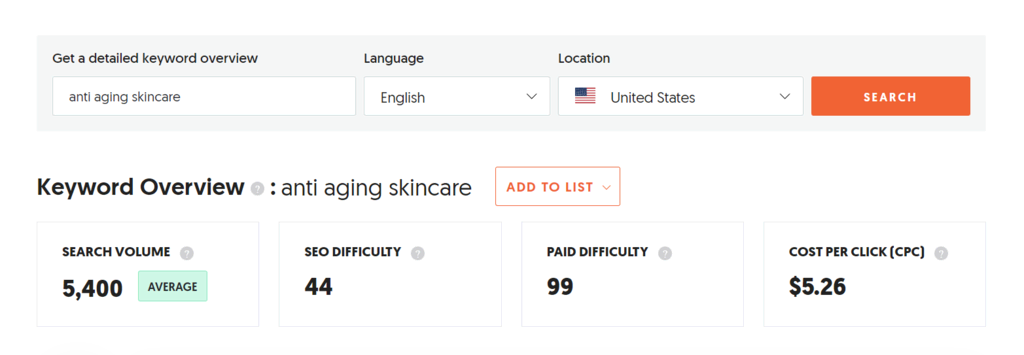
- Assess market demand. Ensure that your chosen niche is profitable and sustainable. Choose evergreen markets that have a consistent demand all year round. Quick research on Google Trends or Ubersuggest can help you check keyword popularity.
Step 2. Select a Platform
After choosing an affiliate niche, the next step is deciding on a platform to publish your content. The two main options to start affiliate marketing are social media and personal websites.
With 4.62 billion regular users, running your affiliate marketing business on social media is a great option, especially if you have pre-existing followers.
Social media platforms provide good opportunities to engage with established communities, build an audience, and demonstrate credibility.
When deciding on a social media platform, consider your audience demographics. For instance, users between the ages of 10 and 19 make up Tiktok’s largest age group. Therefore, beauty bloggers targeting teenage girls might want to utilize that platform as their main channel.
Next, determine where your niche is mostly visible. For example, to promote career acceleration courses, consider advertising on a professional networking platform like LinkedIn. On the other hand, for fashion or travel-related niches, Instagram is more suitable.
Moreover, starting a YouTube channel could really benefit those entering a highly competitive niche since using videos to advertise your product could increase leads by 66%.
Pro Tip:
Utilizing several platforms gives more opportunities to share affiliate links, increasing the chance of generating leads. However, each platform requires a different optimization strategy.Thus, if you’re just starting out, it’s better to choose a platform you’re familiar with and focus on optimizing content there.
While promoting affiliate marketing products on social media platforms is a great way to build an audience, having a separate website makes your brand appear more professional and attracts potential customers. In fact, nearly 65% of affiliate marketers generate traffic by blogging.
Furthermore, blog posts provide more opportunities to include affiliate links naturally and optimize them for search engine results.

Step 3. Create a Website
An affiliate site provides a central hub for all your affiliate marketing content, giving you more opportunities to highlight other promotional materials.
Here are a few essential steps:
Get Web Hosting
Web hosting is the service that enables you to store your website files and make them available on the internet.
While several types are available, shared hosting is a great option for affiliate marketers, as it’s affordable and doesn’t require technical knowledge.
Moreover, you’ll also need a domain name. A domain name is your affiliate site address. As it is what internet visitors type to access your site, pick a unique yet simple one, aiming for short names that will reflect your brand and avoiding special characters.
Here at Hostinger, our Premium and Business Shared Hosting plans include a free domain – you only need to use our instant domain search to check its availability.
Choose a Website Building Platform
Thanks to content management systems (CMSs) like WordPress and website builders, you don’t need coding knowledge to create a website from scratch.
A website builder simplifies website building tasks, often featuring a drag-and-drop interface for easy customization. It is a great option for users who want to set up their websites quickly and without coding.
Offering a lot of flexibility, a CMS is ideal for users who want more control over their affiliate sites. However, it has a steeper learning curve than a website builder.
In addition to WordPress, other popular CMSs are Drupal and Joomla.
Important! Creating your site with a CMS like WordPress requires a hosting plan. Make sure to choose fast WordPress server hosting to improve site performance and user experience. Opt for web hosting with Joomla or Drupal optimization if you plan to use these content management systems.
We also recommend reading our beginner-friendly guide that explains how to build a website using different platforms.
Customize Your Site With Themes and Plugins
For WordPress users, various free themes are available to download in the official directory. Just make sure the chosen theme is not only visually appealing but also loads fast and is responsive.
Moreover, install the best WordPress plugins to improve site performance and security, and help you better manage the website.
Step 4. Join an Affiliate Program
With a target audience in mind and a platform to start publishing content, the next step is signing up for an affiliate marketing program that fits your niche.
You can simply research brands within your niche and see if they offer affiliate programs that you can join. Alternatively, apply for an affiliate network to obtain access to a variety of affiliate programs at once.
When looking for the right affiliate program, there are some aspects to consider:
Cookie Period
All affiliate sales are attributed to you through a tracking cookie attached to your affiliate links that could last from one to over 30 days. While a shorter cookie period can still be effective, programs with a longer one provide more time to convince your audience to convert.
Commission Structure
Subscription-based businesses usually offer recurring commissions, enabling you to get money for as long as the customer pays for the service. Others require you to generate a certain amount of sales before sending the payout.
Moreover, pay attention to the commission rates. Depending on the type of products you’re promoting, there are three types of affiliate programs:
- Low commission, high volume. These programs are low-paying but offer a wide range of mainstream affiliate products. Thus, generating a lot of content and traffic is necessary to reach your revenue goal. Amazon’s affiliate program is an example.
- High commission, low volume. With high-paying affiliate programs, you generate more revenue with fewer sales. They usually include luxury affiliate products like watches, jewelry, and antiques.
- High commission, high volume. These programs are highly competitive due to their high earning potential. Examples include credit card and web hosting affiliate programs.
Brand Alignment and Reputation
Partnering with unreliable merchants is going to negatively impact your brand. Before deciding on an affiliate partner, check out online reviews, discussion forums, or social media conversations to evaluate their brand reputation.
Moreover, ensure you are partnering with brands suitable to your content and audience group. Otherwise, you’ll risk losing the audience’s trust.
Support
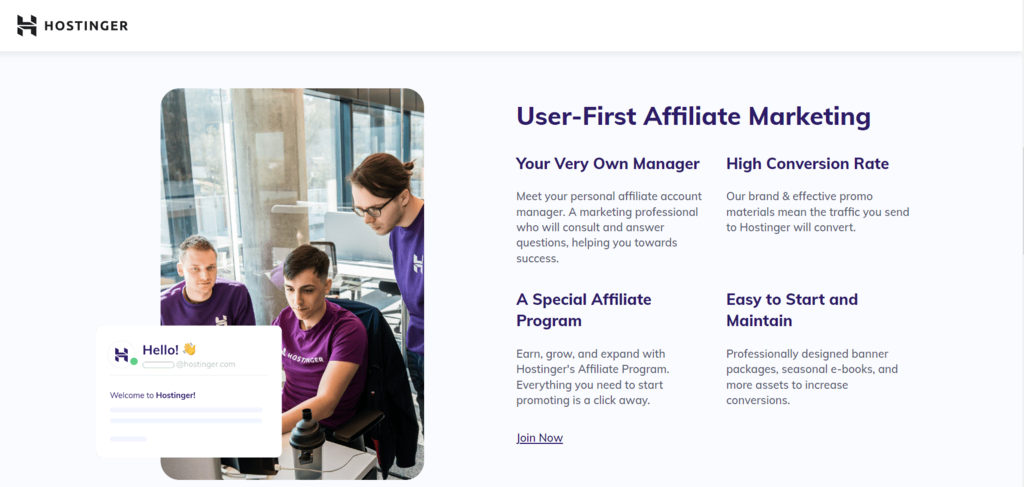
See if the program provides additional resources to help you market their product, such as visuals or workshops. For instance, affiliates joining Hostinger Affiliate Program get extra assistance from a dedicated affiliate manager.
Once you’ve decided on an affiliate marketing program to join and the products to promote, it’s time to create content.